Twelve Months of Northern Ohio Herping Highlights 2025 (Part 1)
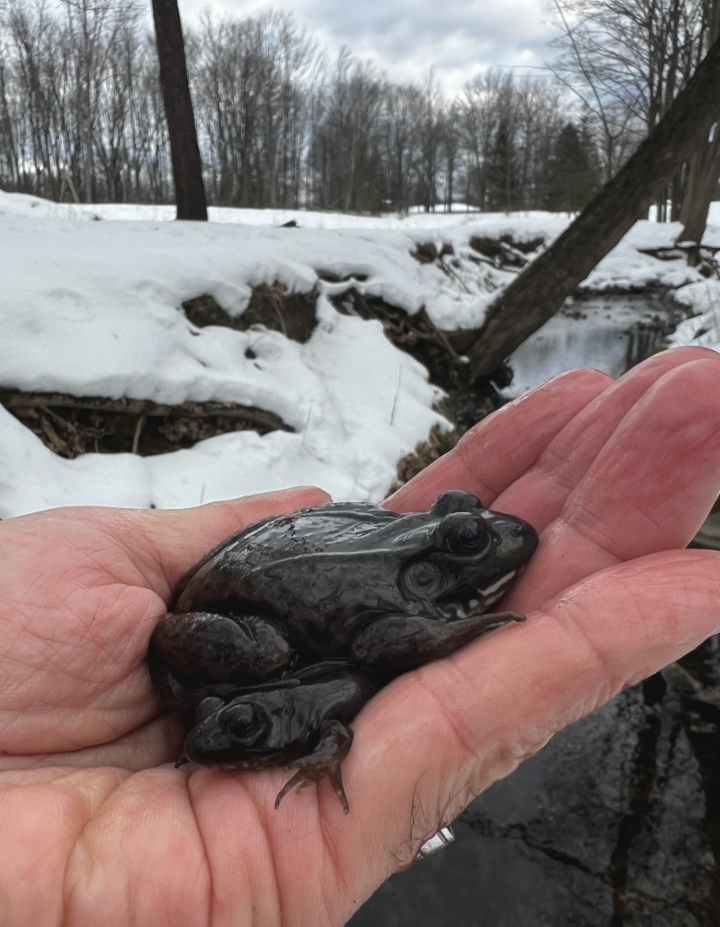
It was a long, cold Winter and it wasn't until late January that the temperature got above freezing and some snow started melting. On January 29th I found these two Green Frogs under a rock along the edge of a creek. Green Frogs are by far the most commonly seen frogs in Ohio. On occasion, amphibians can be found under rocks at the edge of creeks in cold weather, as the running water keeps the temperature above freezing.
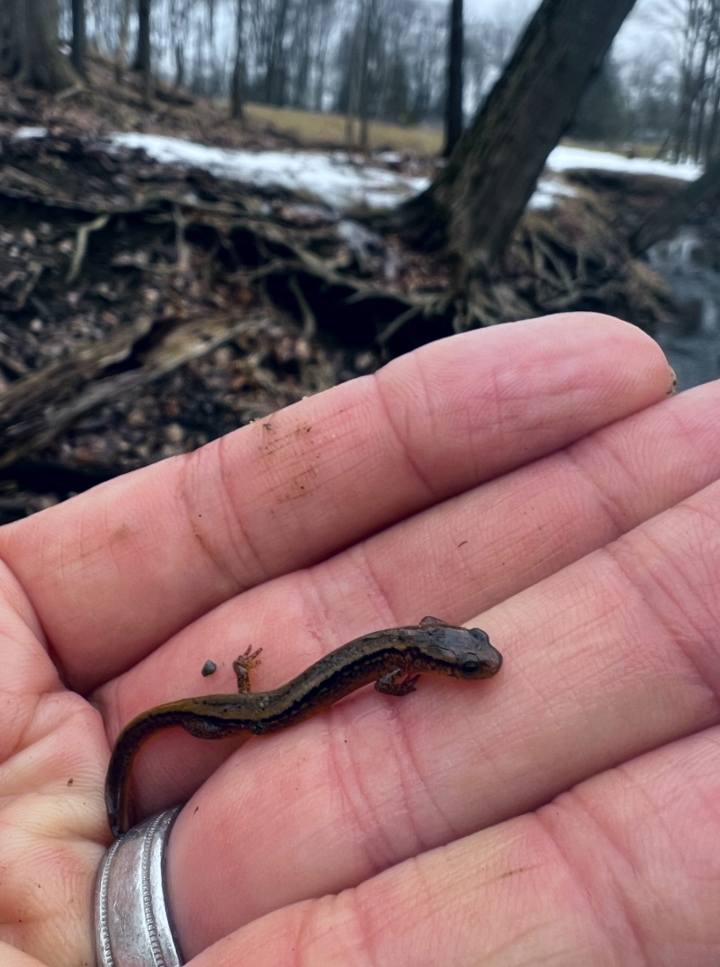
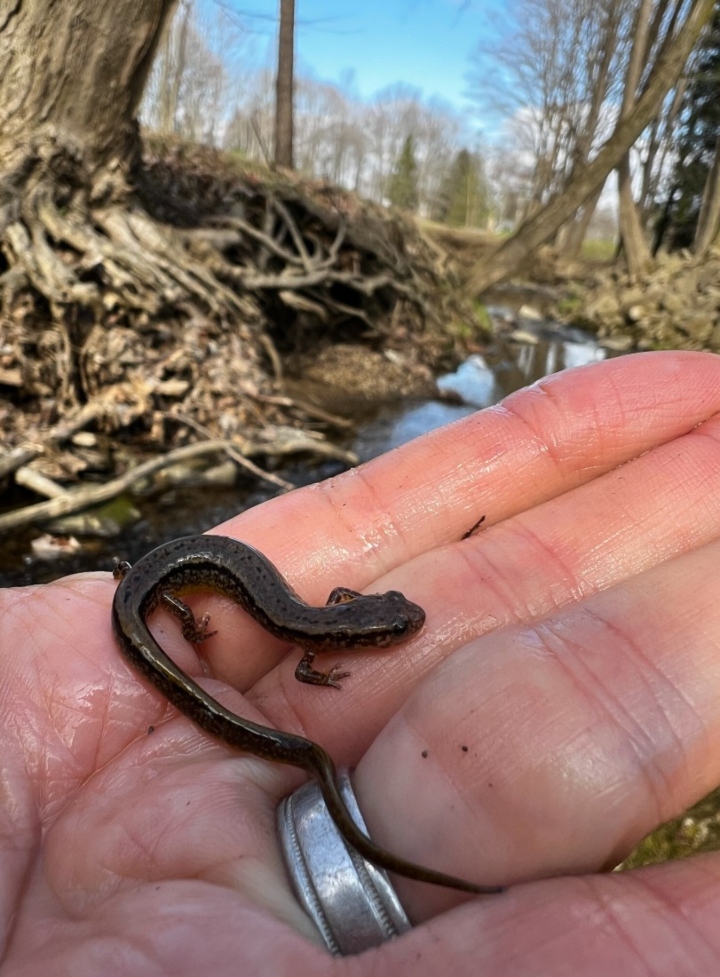
Two-lined Salamanders are another amphibian that can sometimes be found along creeks when there's still snow on the ground. I found this one on February 26th. In the Summer, it can be found quite some distance from running water, but the most reliable way to find them is flipping rocks along running streams.
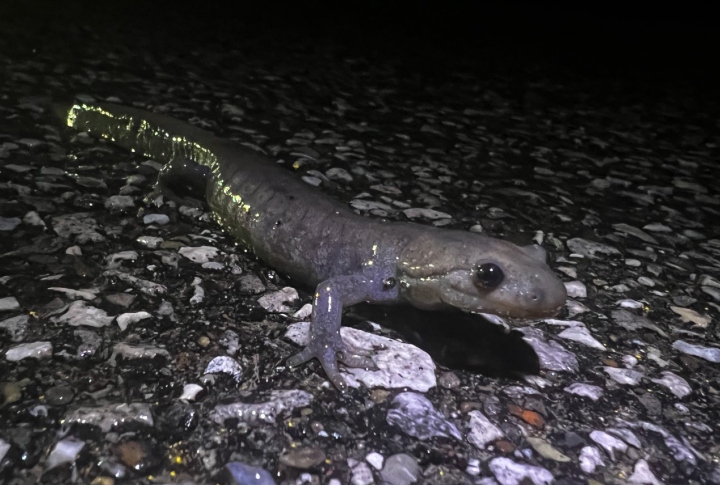
This Jefferson Salamander was seen crossing the road at night on February 27th. This species migrates to breeding pools before Spotted Salamanders, Wood Frogs and the harbingers of Spring - Spring Peepers. Sometimes I've seen them leaving breeding pools as Spotted Salamanders are observed arriving at them.
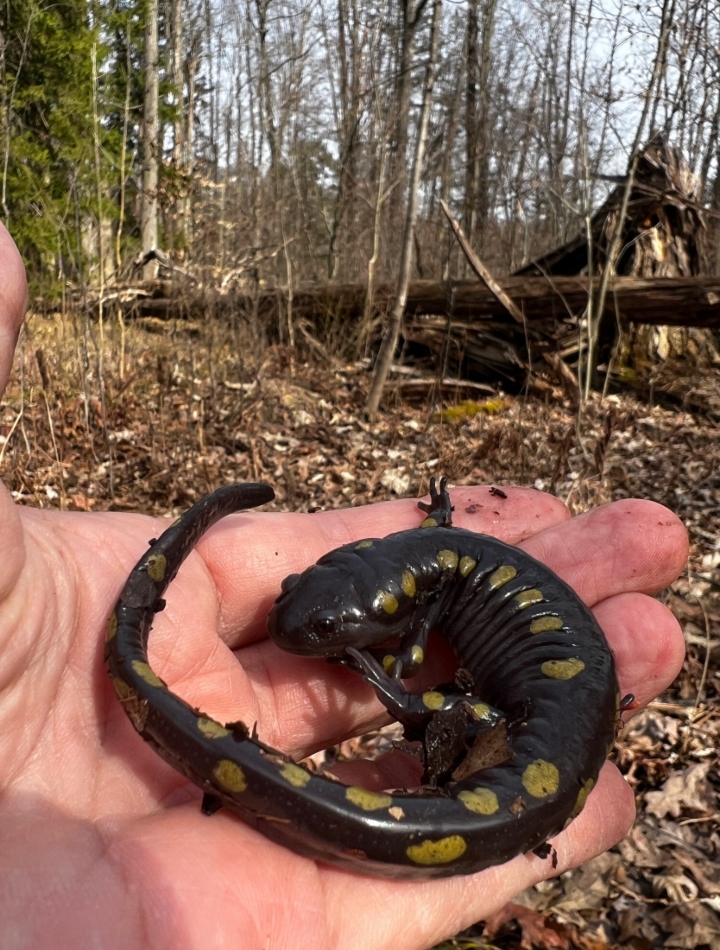
I went to Japan for the first two and a half weeks of March, so I did not get to see the annual Spring amphibian migration, but I did find this Spotted Salamander than hung around after the migration on March 19th. These amphibians spend most of their time underground and are not often seen outside of the month of March.
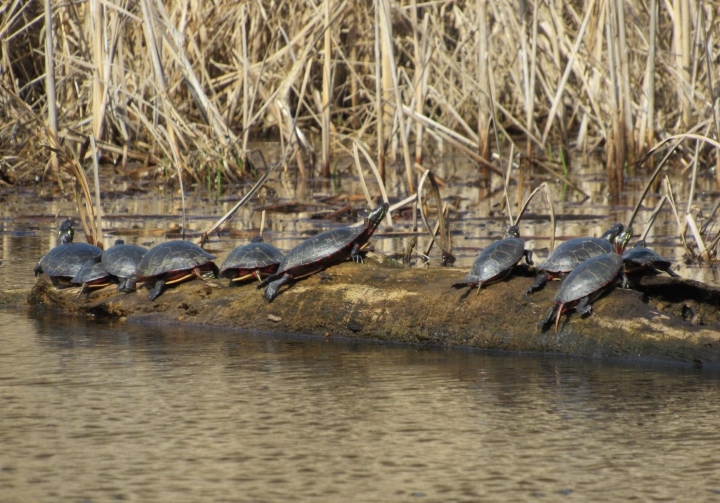
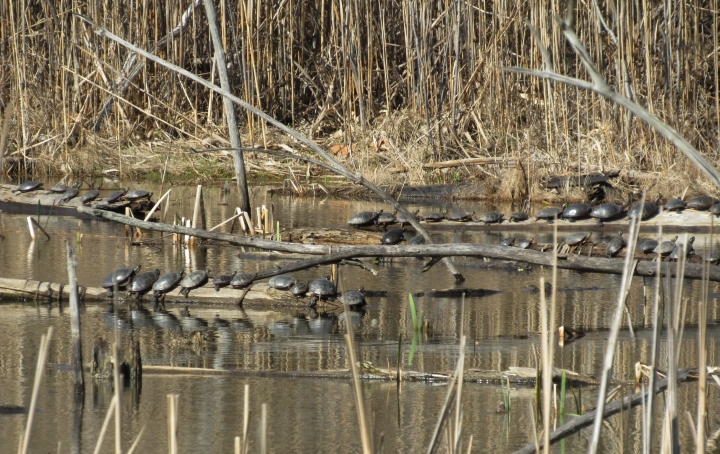
March 21st was a pretty good day for turtle watching. Midland Painted Turtles are the most often seen reptiles in the state. They are also our most colorful turtle. I encounter them in a variety of situations, though they are most easily seen in the Ohio & Erie Canal.
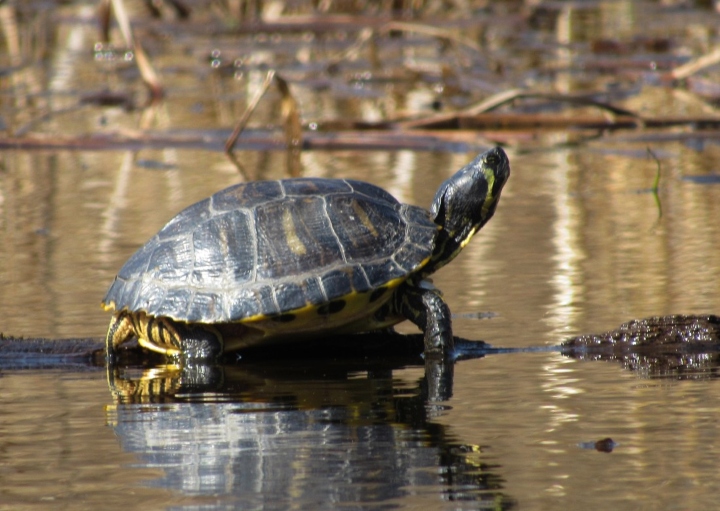
We have a number of non-native turtle species that manage to survive and in some cases reproduce, in northern Ohio. This is one of them - the Yellowbelly Slider.
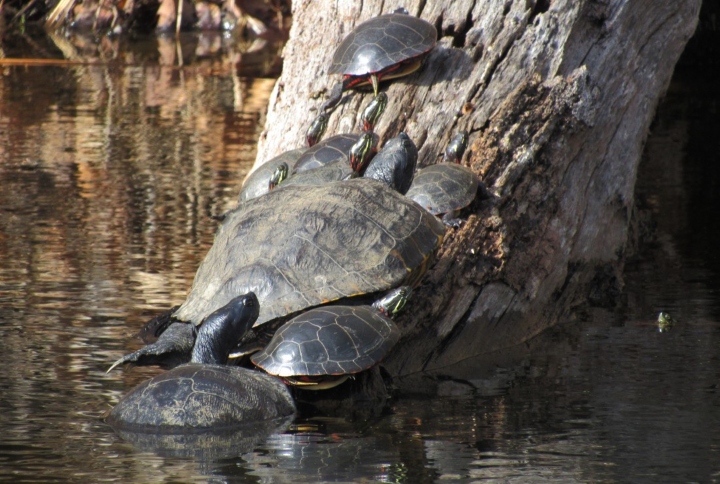
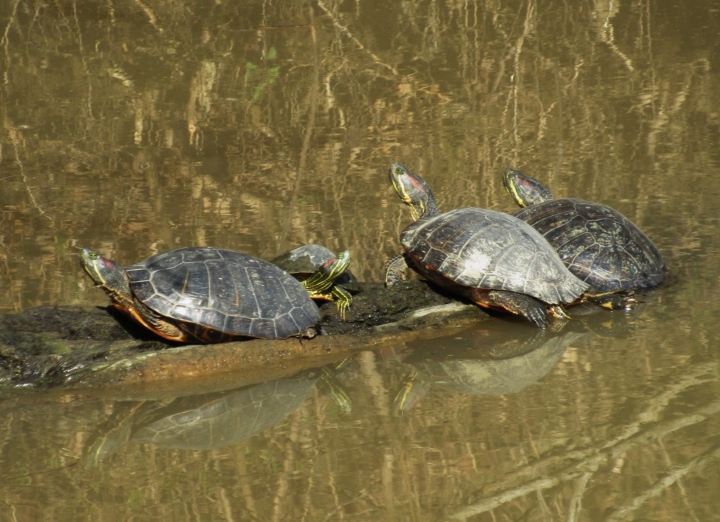
Although there's an isolated native population of Red-ear Sliders in south-central Ohio, they are not native to northern Ohio, where these were seen. These are melanistic (black) males basking with Midland Painted Turtles. Older male Red-ears often slowly turn all black.
The first wild herp that I ever found was a Redback Salamander. I was single digits in age and it was under a brick behind my friend's garage in Cleveland - it was an unexpected and thrilling experience. For this reason, I never tire of finding these creatures and feel lucky to have them residing in my yard. This one was found on March 22nd.
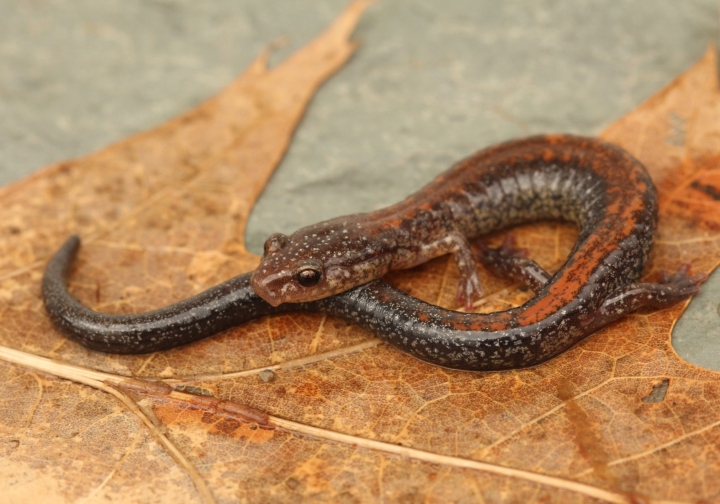
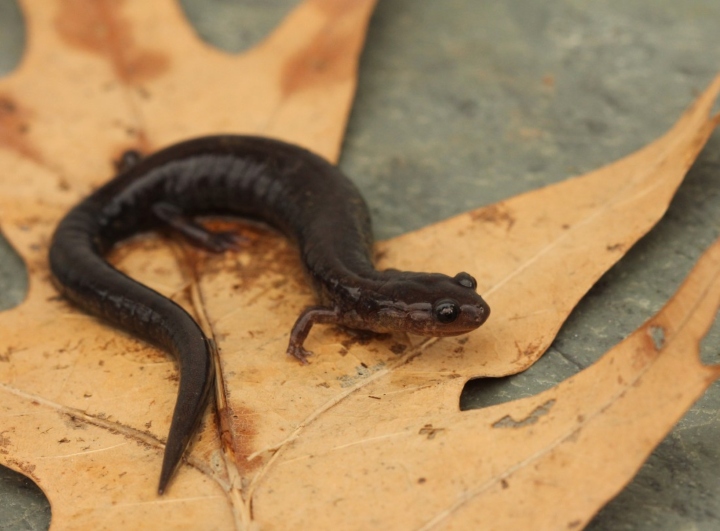
Redback Salamanders are notable for their color polymorphism. Although not as common, I often find the "leadback" version of the Redback Salamander in my yard too. This one was found on the same day as the previous Redback. These amphibians usually live in forested areas under rocks, logs, bark, and other debris.
Many, many, Midland Painted Turtles were out basking on April 1st.
Red-ear Sliders were out too. The Red-eared Slider is included in the list of the world's 100 most invasive species.
A backyard Two-lined Salamander. This species is more water-oriented than the related northern redback salamander, and can often be found in and around water such as rain puddles, streams, swamps, and damp stream beds, whereas the northern redback tends to be found in damp ground, but usually not near open water.
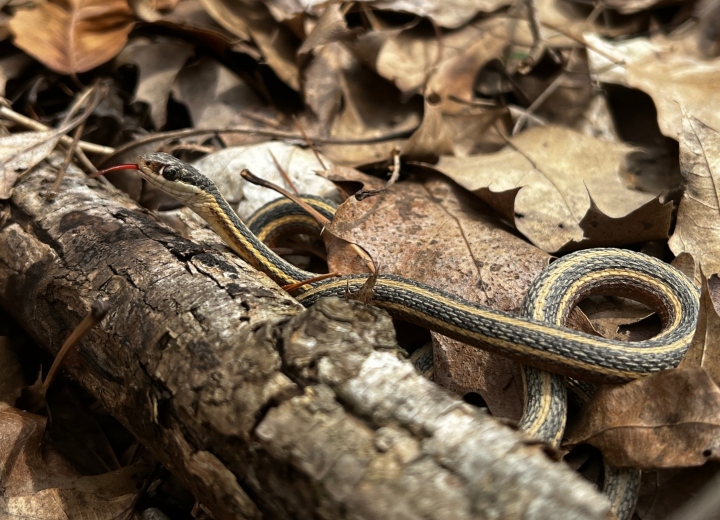
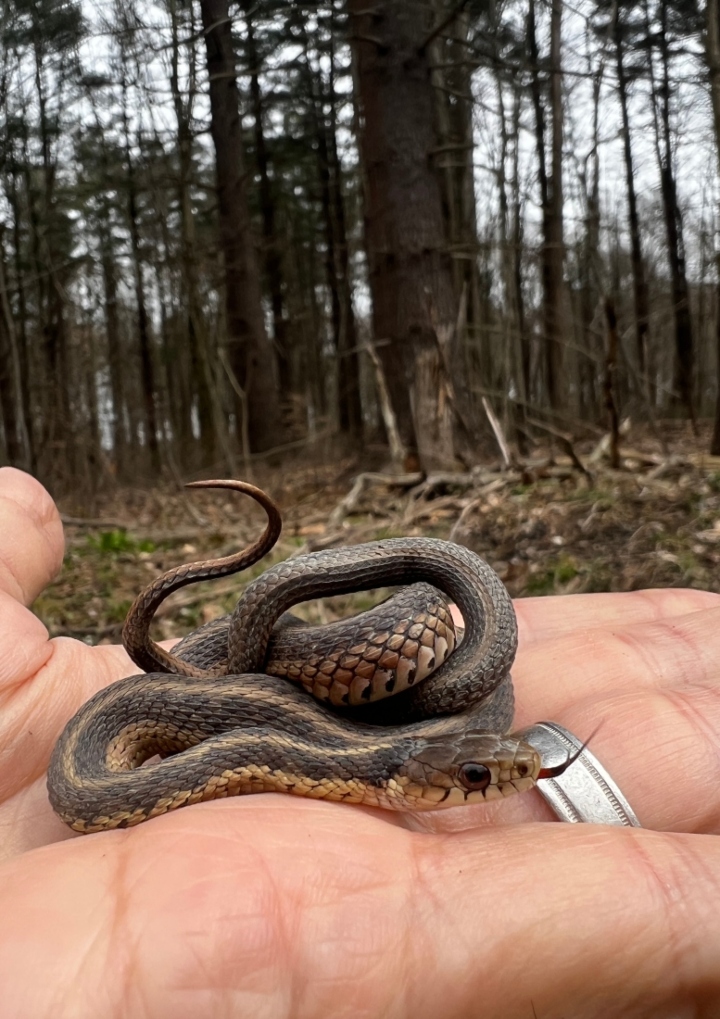
I found my first snakes of the year on April 14th. Male Eastern Garter Snakes often emerge from hibernation before females. They are habitat generalists and can be found in a variety of situations.
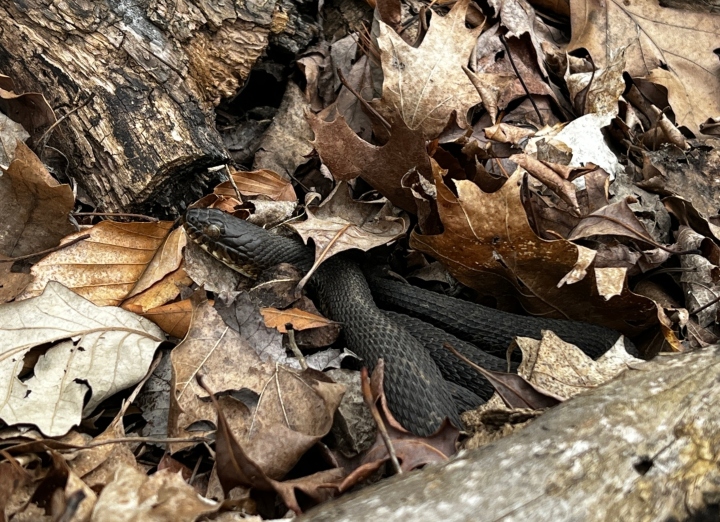
Northern Water Snakes are strongly patterned as juveniles, but eventually become nearly all-black. They are active during the day and at night. This species is most often seen basking on rocks, stumps, or brush.
The Northern Ribbon Snake is uncommon, so it's always great to find one. It is semi-aquatic and is almost always found close to water, such as wetlands and the shorelines of lakes and rivers. The wetland and shoreline habitats that it inhabits are generally near forests, and this species tends to be absent from regions with little to no forest cover.