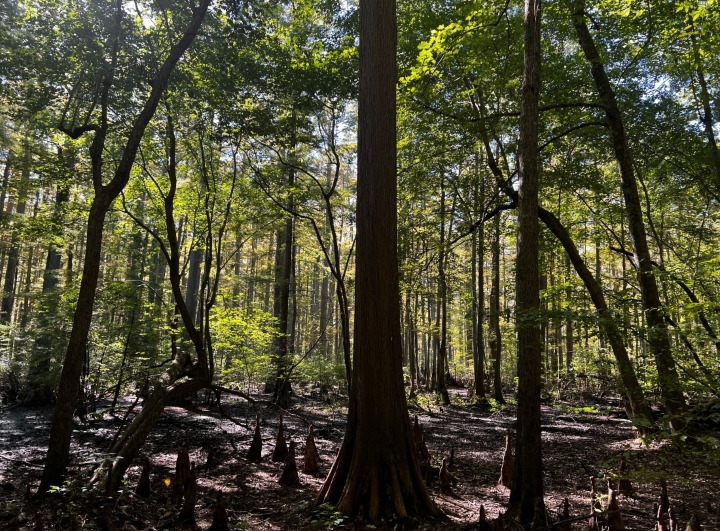
Heron Pond in southern Illinois. This swamp is a great place to look for amphibians and reptiles.
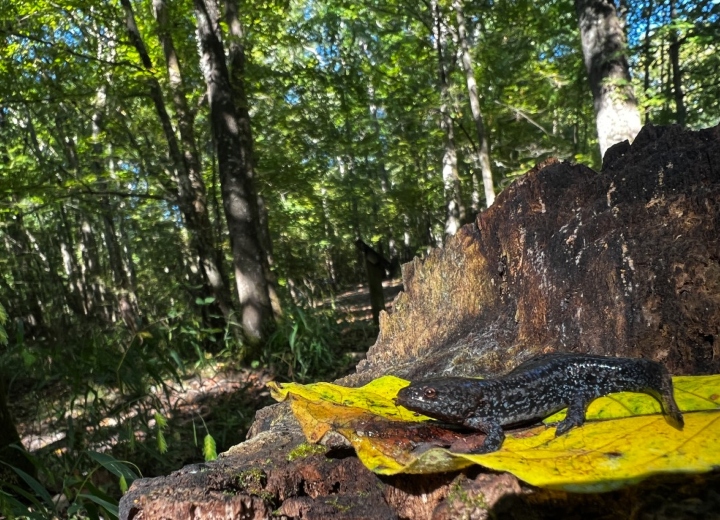
Mole Salamanders are black, brown or grey in color, with pale bluish or silvery flecks. Adults are found in forested habitats like bald cypress and tupelo swamplands, flatwoods sloughs and nearby ponds.
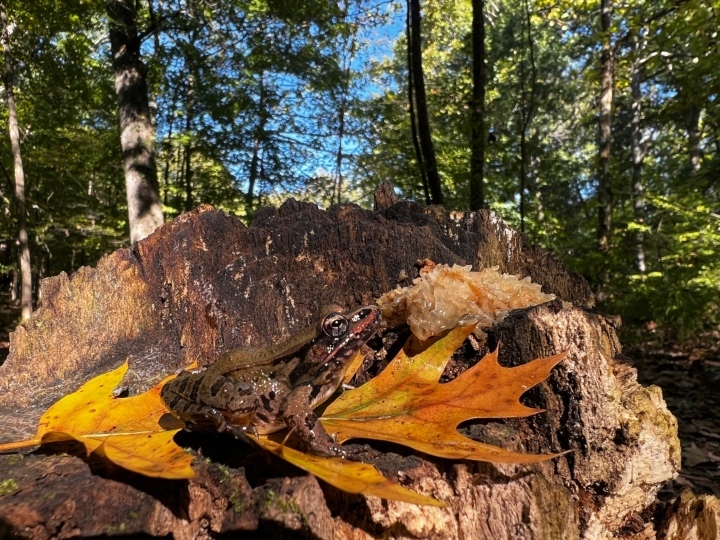
Southern Leopard Frogs are one of the most conspicuous herps that I see on my visits to southern Illinois. At night they are often out and about and seen crossing roads.
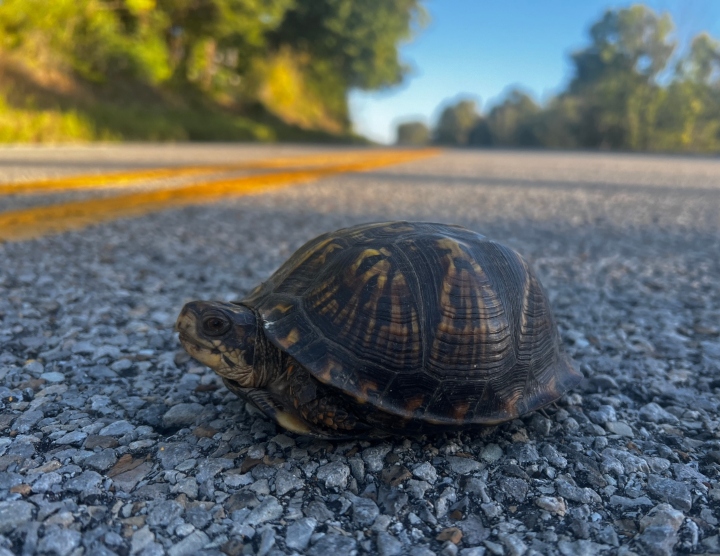
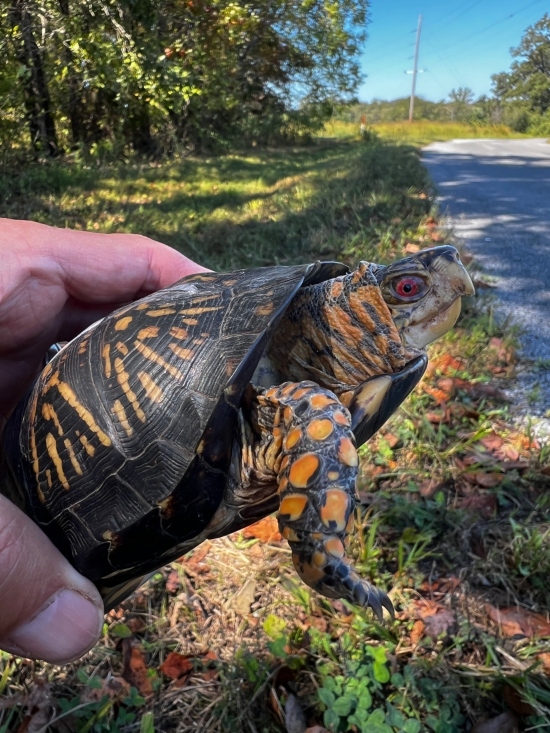
The Box Turtle gets its name for its ability to close up the bottom of its shell with a “hinge.” Although it lives on land, the box turtle is more closely related to aquatic turtles than tortoises.
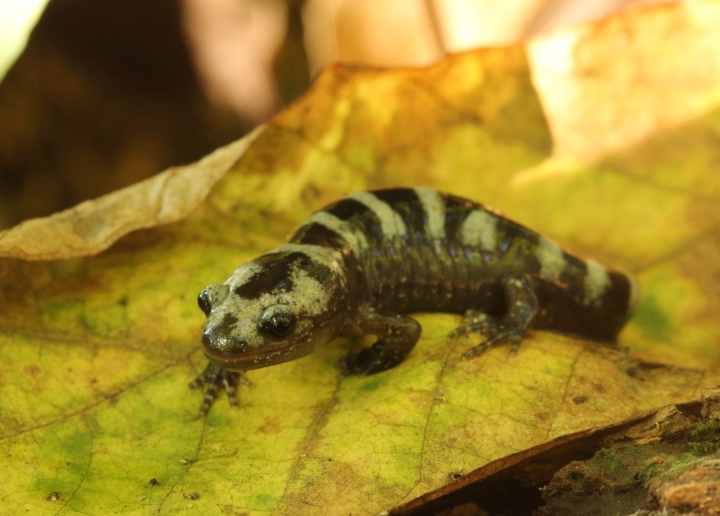
Unlike most mole salamanders, instead of laying eggs in the spring, Marbled Salamanders lay their eggs in the fall in low areas that are likely to flood during winter rains. The female coils around the eggs until they can be underwater.
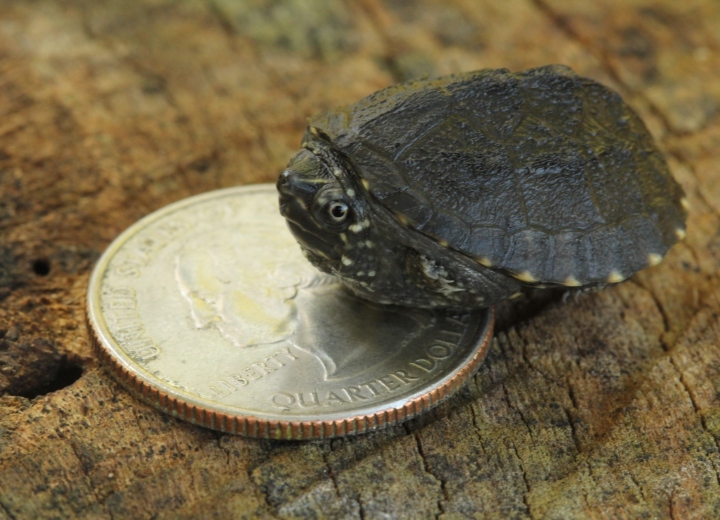
A newly hatched Stinkpot - these are one of the smallest turtle species in the United States.
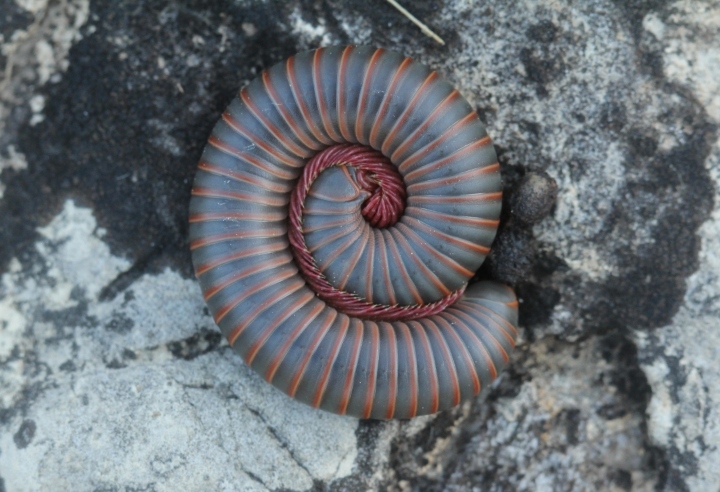
American Giant Millipedes feed on decomposing vegetation or organic matter mixed with soil. Millipedes are very important, because they help put nutrients back in the soil for plants and other organisms to use.
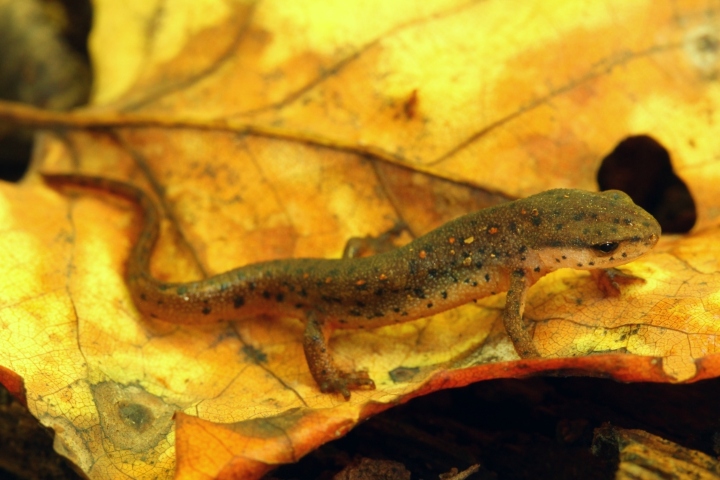
Central Newts look similar to the Eastern Newts that I find in my home state of Ohio, with olive backs covered in black spots and sporting a bright yellow belly.
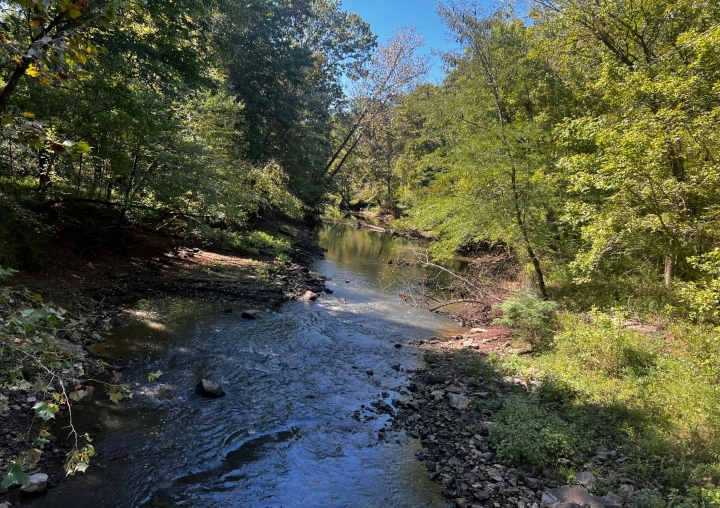
The Cache River is a great place to herp in Johnson County, Illinois.
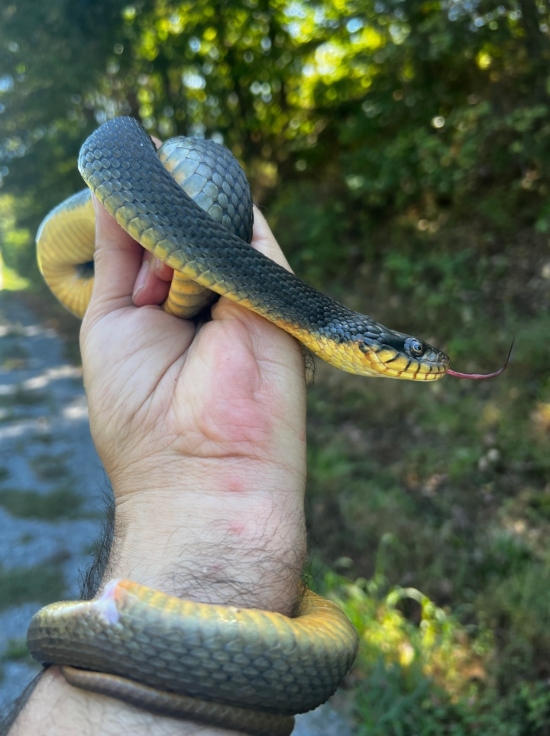
A fine looking Yellowbelly Water Snake that I helped across the street.
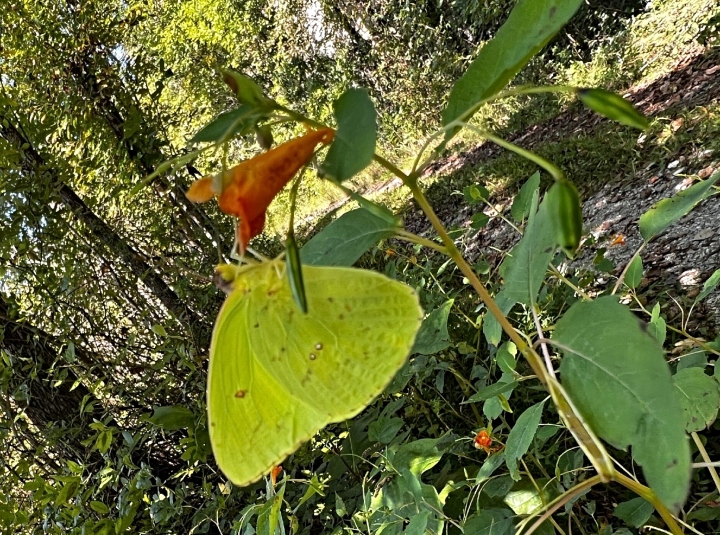
A Fall insect and flower - a Yellow Sulfur on Jewelweed.
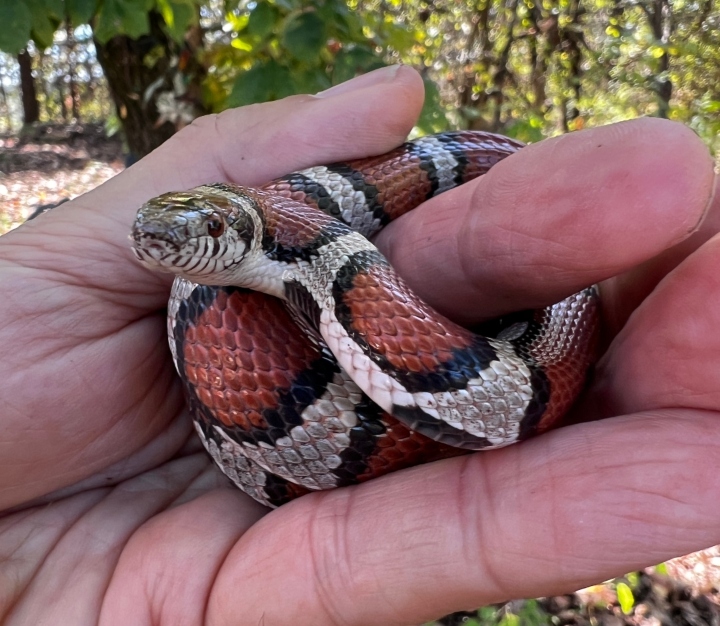
A sharp looking Red Milk Snake.
A male Eastern Box Turtle seen at the edge of the road. Male EBTs often have red eyes.
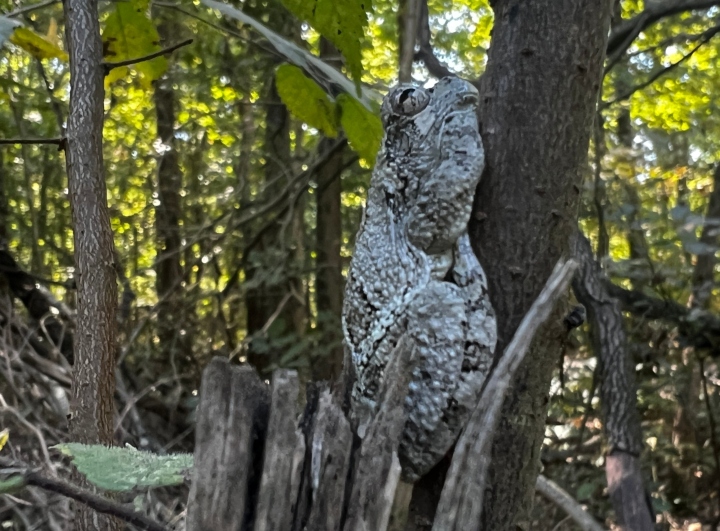
The Bird-voiced Treefrog is found over much of the southeastern United States. Its favored habitat is wooded swamps near streams and rivers. It blends in very well with the tree trunks where it usually hangs out.
Click here to see Part 3
|